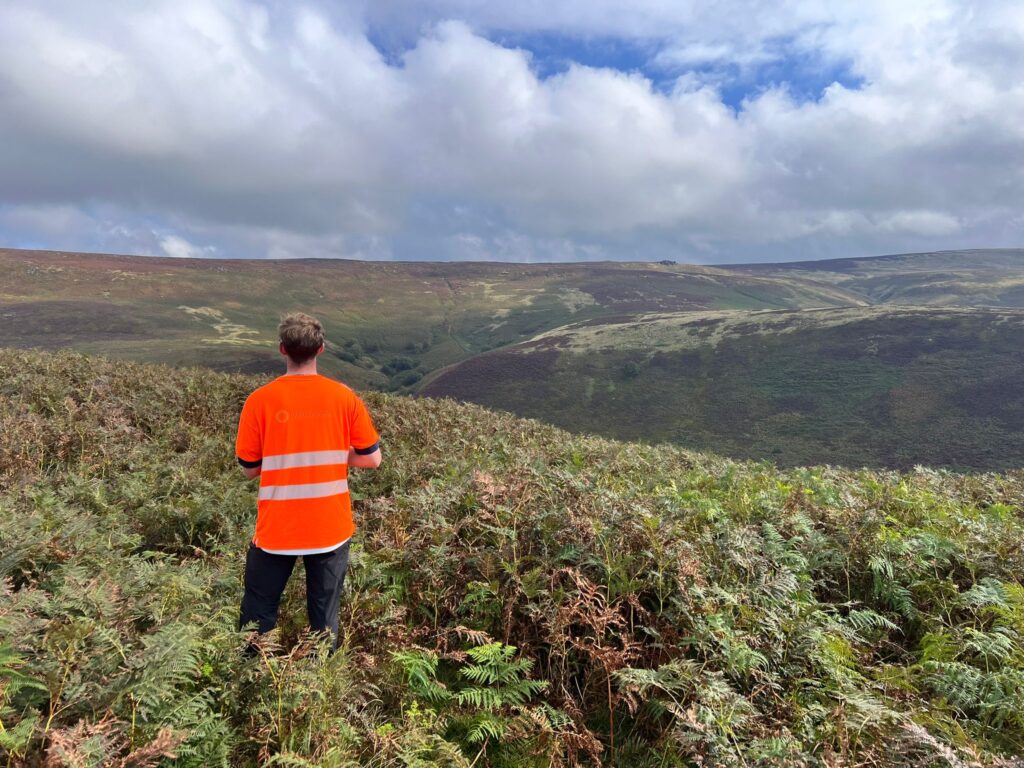
Habitat Works is pleased to be heading back out for a third year supporting Southern Ecological Solutions (SES) on the England Ecosystem Survey (EES), one of the biggest ecological monitoring programmes currently running in the UK.
Delivered on behalf of Natural England, the EES is building a consistent, national picture of England’s habitats, vegetation, soils and wider landscape features. The data collected is already helping to inform environmental policy, natural capital work and long-term nature recovery planning.
We’ve just completed a week of updated training with Natural England as part of a continued focus on delivering reliable, high-quality data across a wide range of landscapes.
A big part of what makes the EES so robust is the way the surveys are structured. Each survey area (or monad) is worked through using a combination of fixed and field-based sampling points. Some plots are randomly pre-selected so we’re assessing habitats, soils and vegetation in a consistent, unbiased way across the country. These fixed points act as the foundation of each survey.
From there, we build out the picture in the field. Linear features like hedgerows and riparian corridors are sampled using standardised plots positioned in relation to those fixed points, so the approach stays consistent but still captures variation in the landscape. Discrete features like ponds and individual trees are recorded as whole features, selected using proximity and ecological characteristics such as structure and diversity. Wider landscape features are also recorded where they occur to help build a full picture of how habitats connect across each area.
The 2026 field season will see the team working across a really varied mix of habitats, from upland moorland and ancient woodland through to lowland grasslands and wetlands. Every survey adds another piece to a national dataset that’s helping improve how we understand and manage the natural environment.