The overarching aim of the project was to create a coherent Open Space Strategy, linking up new and existing public wildlife spaces across the Parish, to create a Green Infrastructure Network that provides a valuable resource for both wildlife and the residents of the wider area long into the future.
As part of the works, we carried out a comprehensive feasibility and research study. Our findings highlighted significant potential to transform the Parish’s green spaces into valuable ecological assets and accessible community resources, enhancing the well-being of residents and visitors alike. Our recommendations were underpinned by a focus on restoring key habitats and biodiversity to the area, using heritage varieties and native and traditional planting schemes appropriate for South Worcestershire.
Following review of our report and design recommendations, we were subsequently commissioned by Norton-Juxta Kempsey Parish Council to undertake biodiversity improvement works at the Kings Meadow and Parish Hall Sites. The initial Phase of works included scrub clearance, woodland management and pond restoration works.
The works were undertaken with respect to the following guidelines;
- Natural England guidelines.
- Worcestershire County Council’s Trees and woodland in Worcestershire: Biodiversity and landscape guidance for their planting and management
- On the right track: surface requirements for shared use routes
- Paths For All lowland path construction guide and Outdoor access design guide.
Scope Of Works
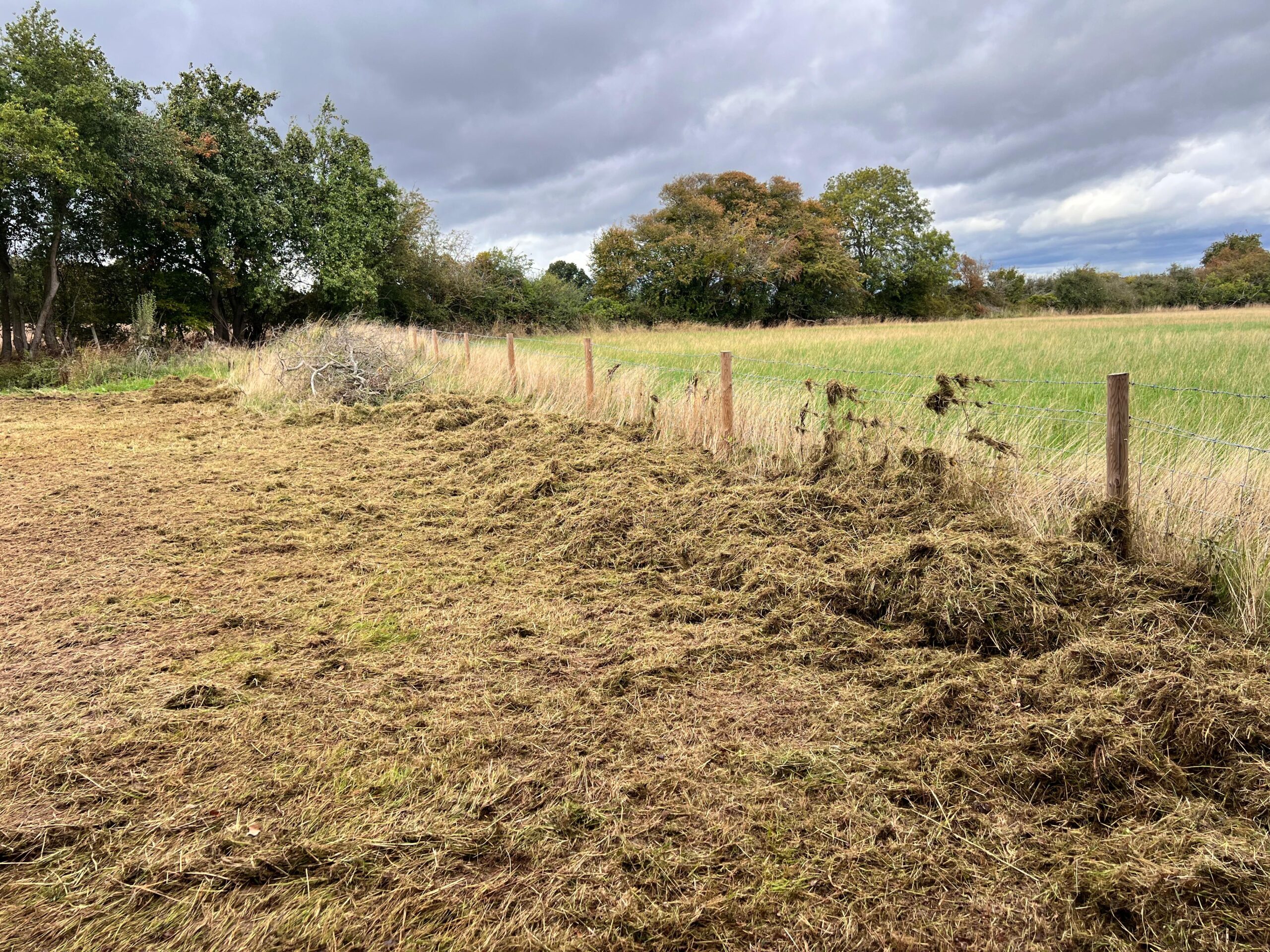
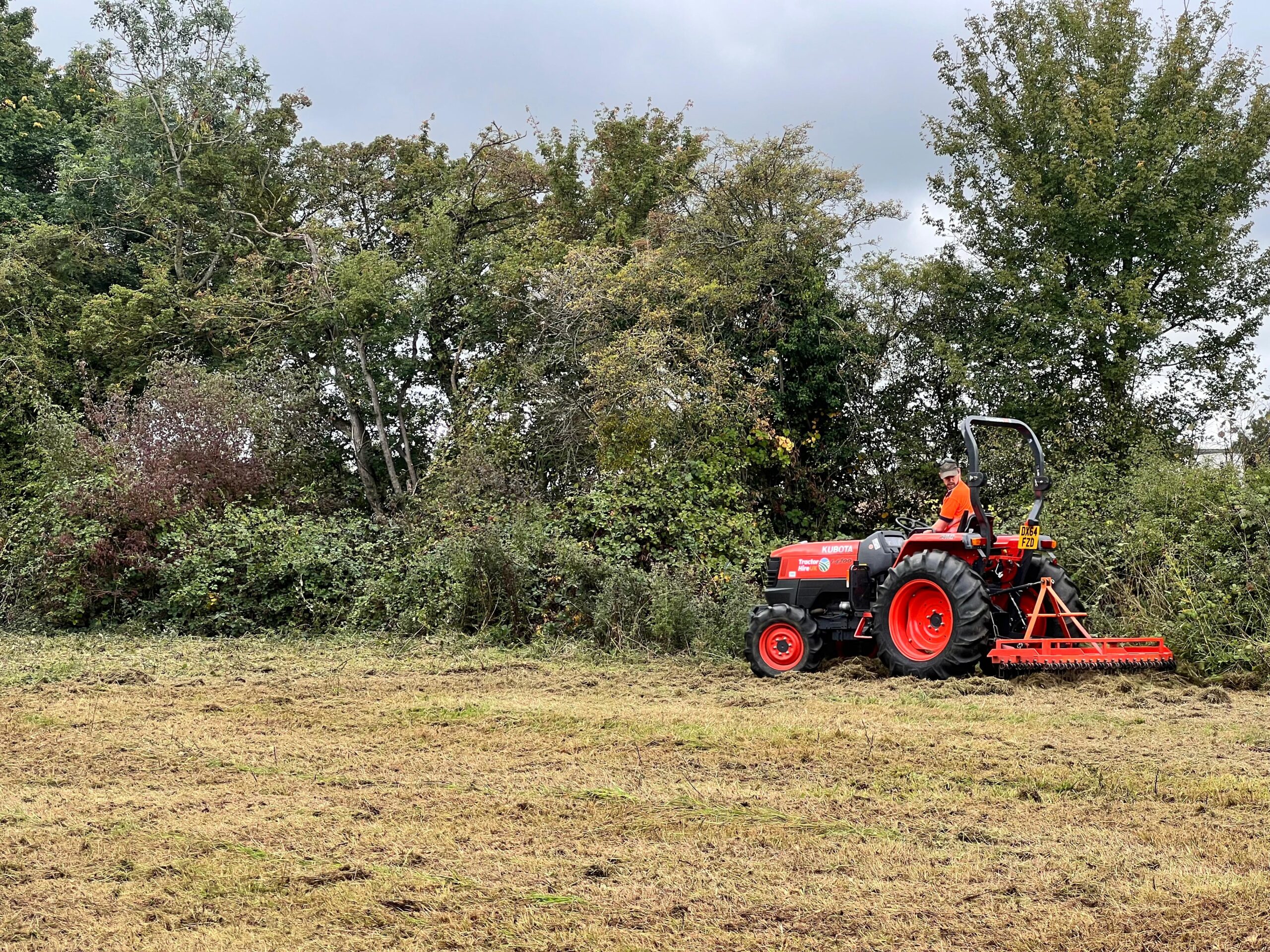
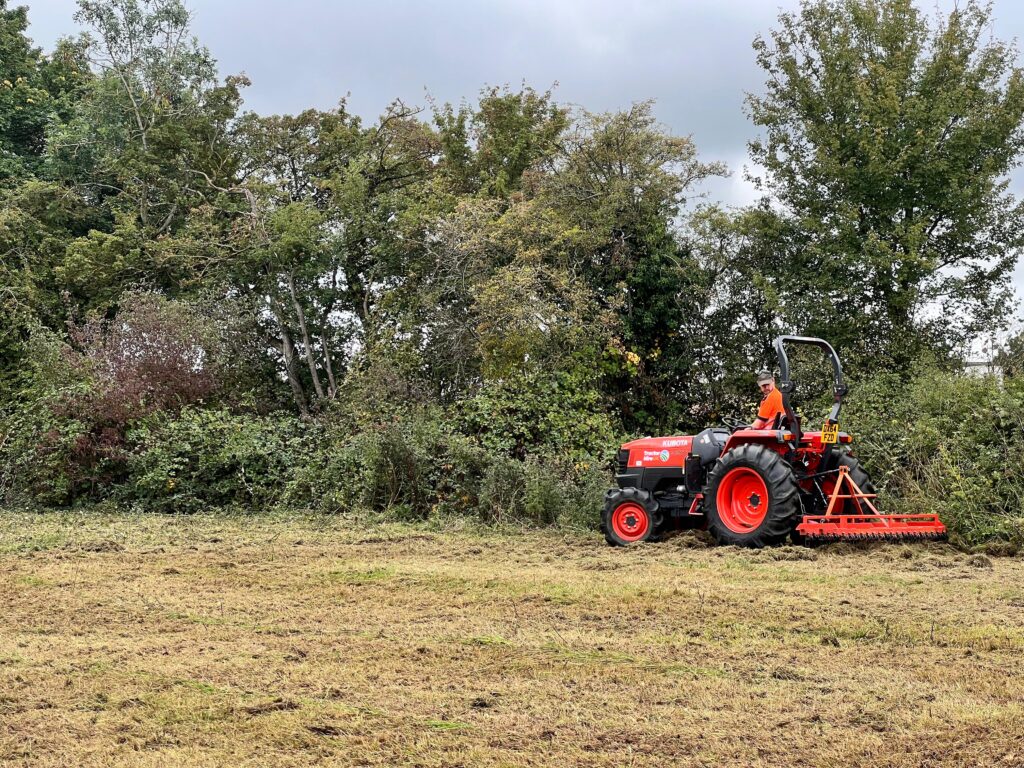
- Prior to undertaking vegetation clearance works, a visual inspection and walkthrough was undertaken to check for hidden objects or exposed services. Any objects of concern were clearly flagged and marked to the works team. On completion of the walkover, the vegetation was cut down to as close to ground level as possible. Any arisings falling within the walked path were raked to the side and placed in appropriate areas as habitat piles.
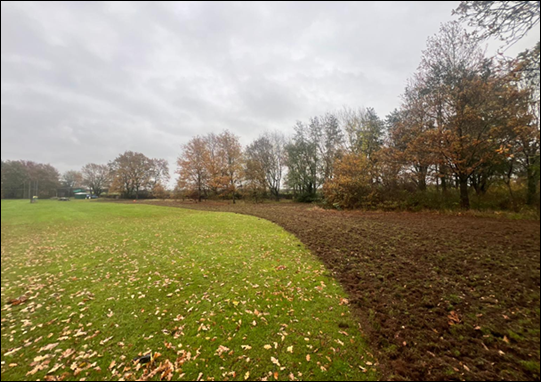
- Grassland Enhancement – An area between sports pitches and woodland was harrowed/rotavated and overseeded with an MG5 wildflower seed mix to enhance species diversity. The area was clearly marked with timber posts to make sure it is not included within the general sports pitch mowing.
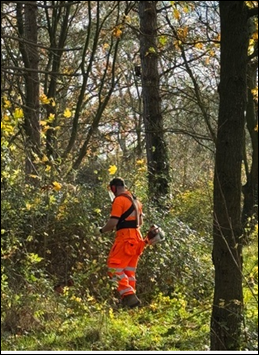
- Woodland Thinning – The woodland was subject to selective thinning to remove weaker trees and non-natives. Brash was retained on site and stacked in habitat piles away from the footpath. The focus was on creating a number of small glades within the woodland which were then over seeded with a shade tolerant wildflower seed mix and native bulbs. Trees identified for removal were felled at ground level using a petrol-powered chainsaw, following industry best practice. Stumps were cut as close to ground level as possible.
- Native bulb planting and seeding – Native bulb and wildflower seed was sown/planted in woodland clearings and along the hedgerow. Species planted included native daffodil, native bluebell, wild garlic and wood anemone. Areas planted with bulbs along the hedgerow verge were marked with wooden stakes and string so the areas can be avoided by the grass cutting contractor responsible for the main pitches.
- Wildlflower Plug Planting – In addition to seeding, the seeded area and woodland edge and hedgerow base was supplemented with native wildflower plug plants (shade tolerant) to enhance the species diversity.
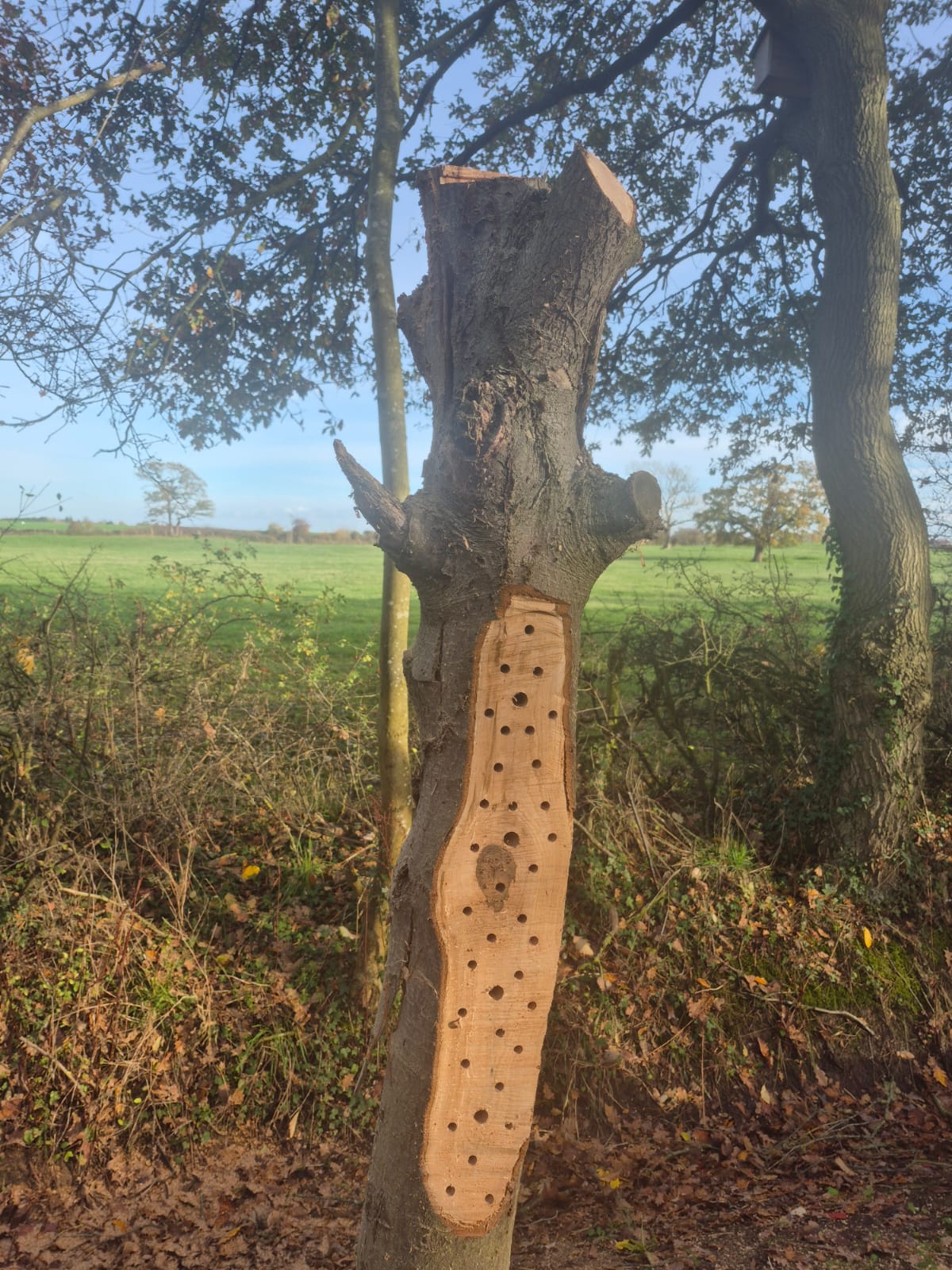
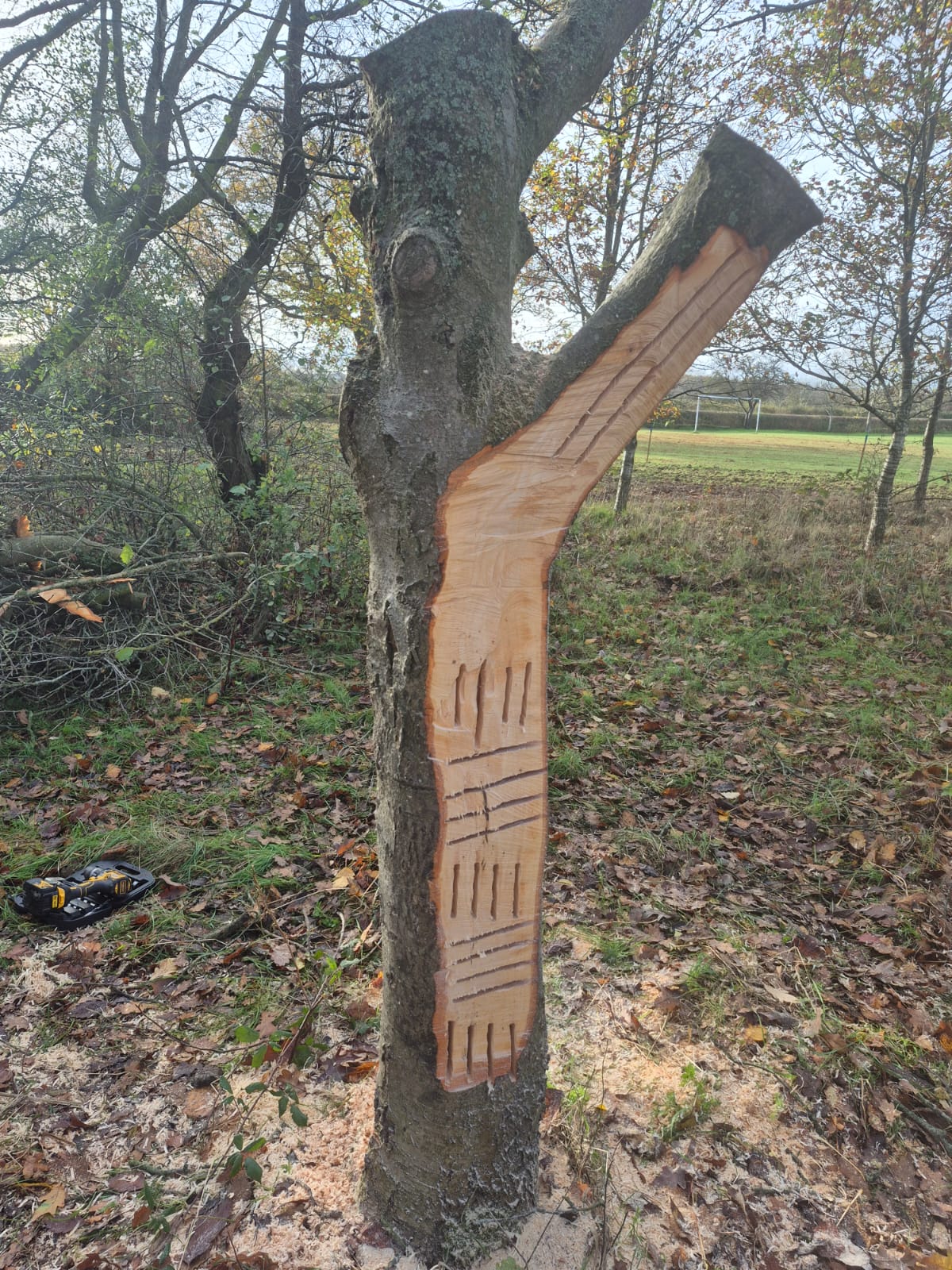
- Bee Posts – Two trees were selected within the woodland area for creating natural bee posts. A standing deadwood tree was selected along with a weaker specimen for felling to head height as a standing monolith with 2 faces cut to provide areas for drilling in holes of varying sizes to be used by solitary bees and invertebrates. In addition to drilling, a number of narrow slots were cut using the chainsaw at varying heights and aspects to create sheltering opportunities for a range of invertebrates.
Project Management
Effective project management underpinned all phases of the Norton‑Juxta Kempsey Parish biodiversity enhancement works, ensuring that delivery remained aligned with the Parish Council’s objectives, statutory guidance, and best‑practice ecological standards. Habitat Works coordinated the programme from initial feasibility through to on‑site implementation, providing clear governance, risk management, and stakeholder communication throughout.
Monitoring & Handover
On completion of the initial works, a handover meeting was undertaken with the Parish Council to review the interventions, confirm maintenance requirements, and outline the expected establishment trajectory for each habitat type.
A short‑term monitoring plan was provided to support the Parish in assessing establishment success, identifying any remedial actions, and ensuring that the long‑term biodiversity objectives of the Tranquillity Trails project are achieved.
Recommendations for ongoing stewardship were integrated into the Aftercare & Maintenance section to support sustainable management of the enhanced habitats.