Whittle Brook is a 9.8 km river that starts in Clock Face, St Helens, and flows under the M62 to join the River Mersey at Great Sankey, Warrington. Once surrounded by farmland, the upper catchment has seen lots of residential and commercial development over the past 20 years, increasing pollution. Without wetlands to naturally clean the water, the brook is under pressure. The ‘Great Sankey Reeding into Water Quality’ Project aims to replace the marginal wetland habitat, lost due to physical modification of the brook during the 1900s.
Scope of Works
Habitat Works Ltd were appointed as Principal Contractor for this project. The habitat creation works were not of sufficient size or duration to be notifiable under CDM regulations, but the regulations were still applicable.
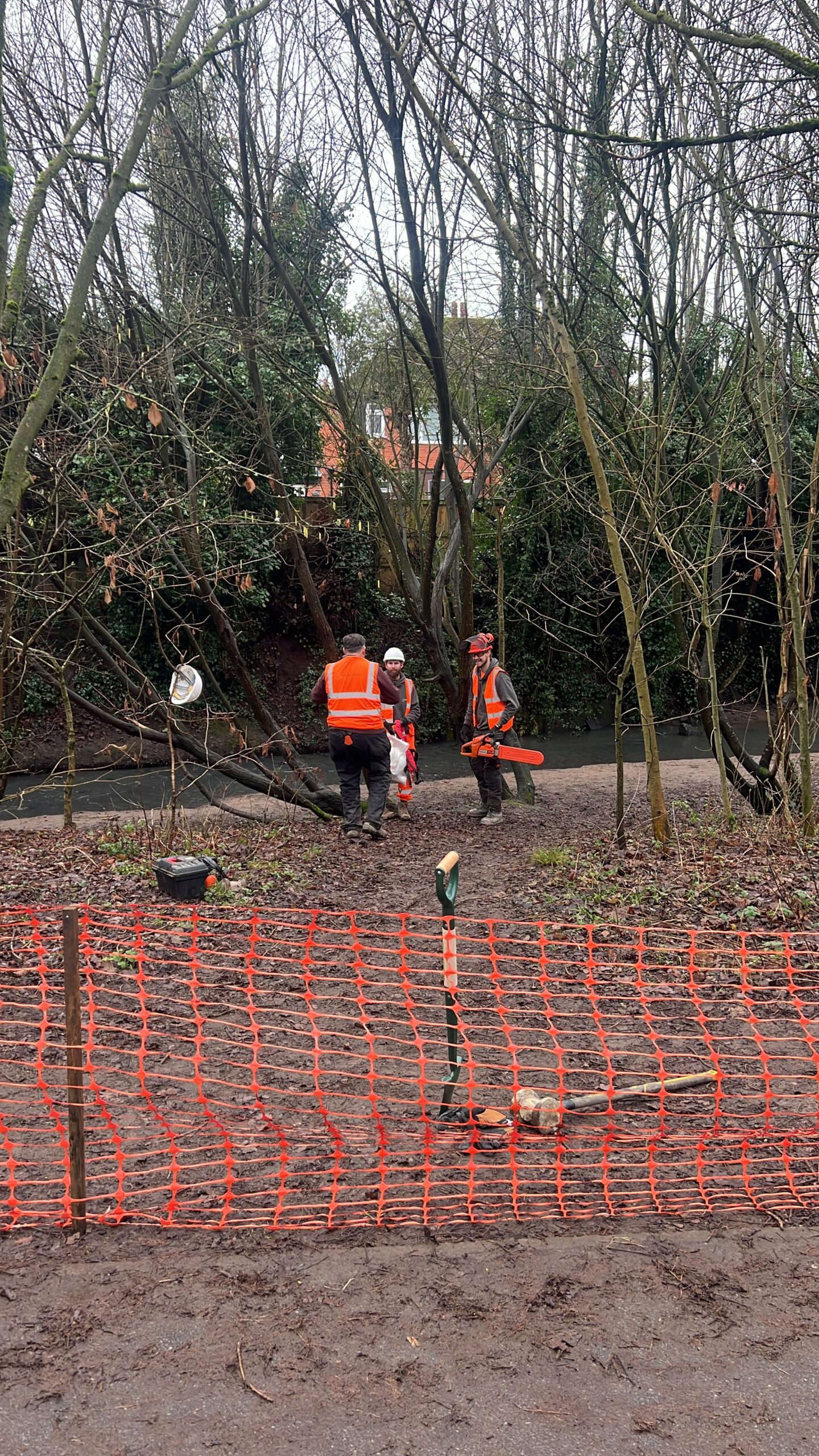
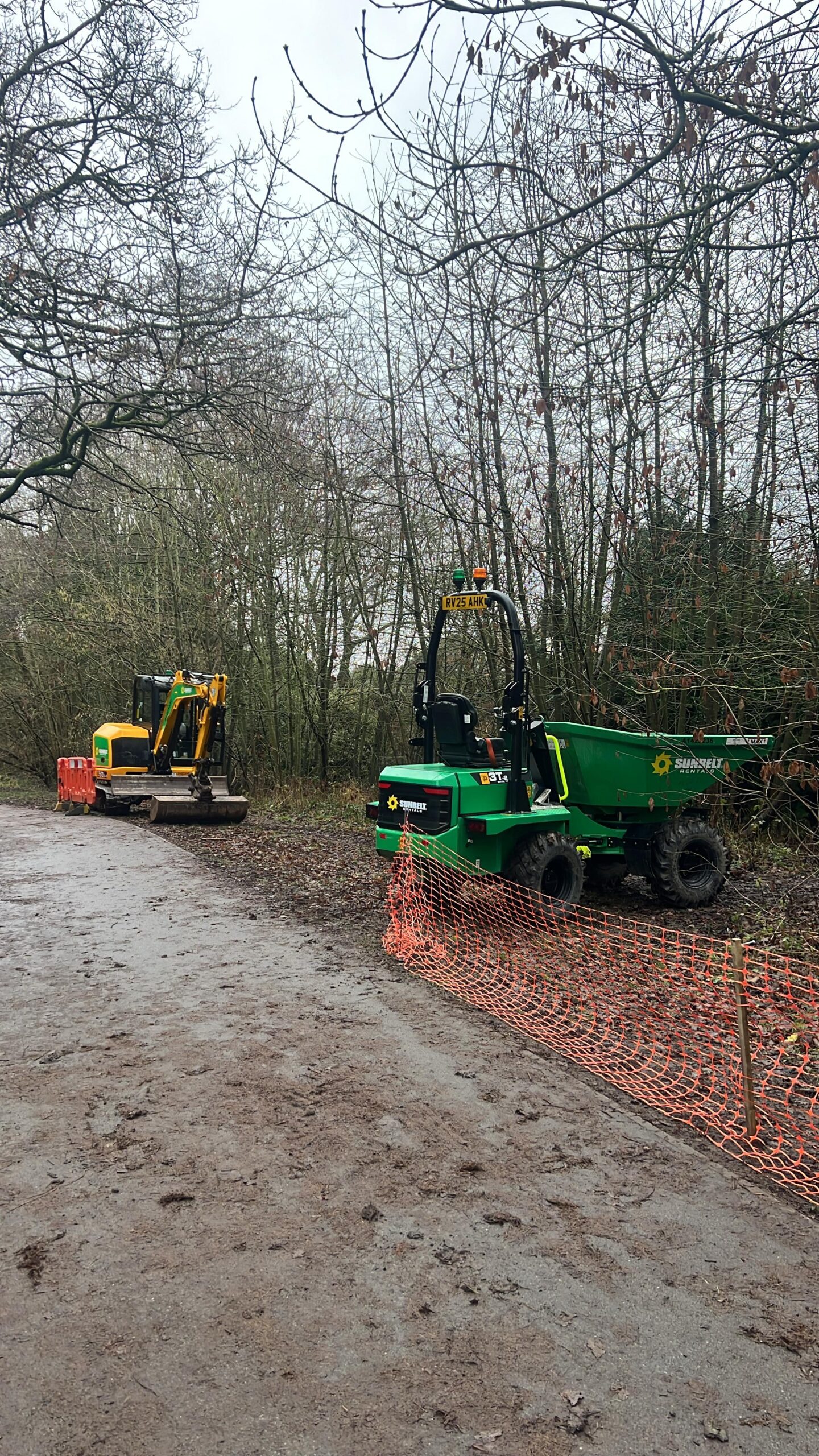
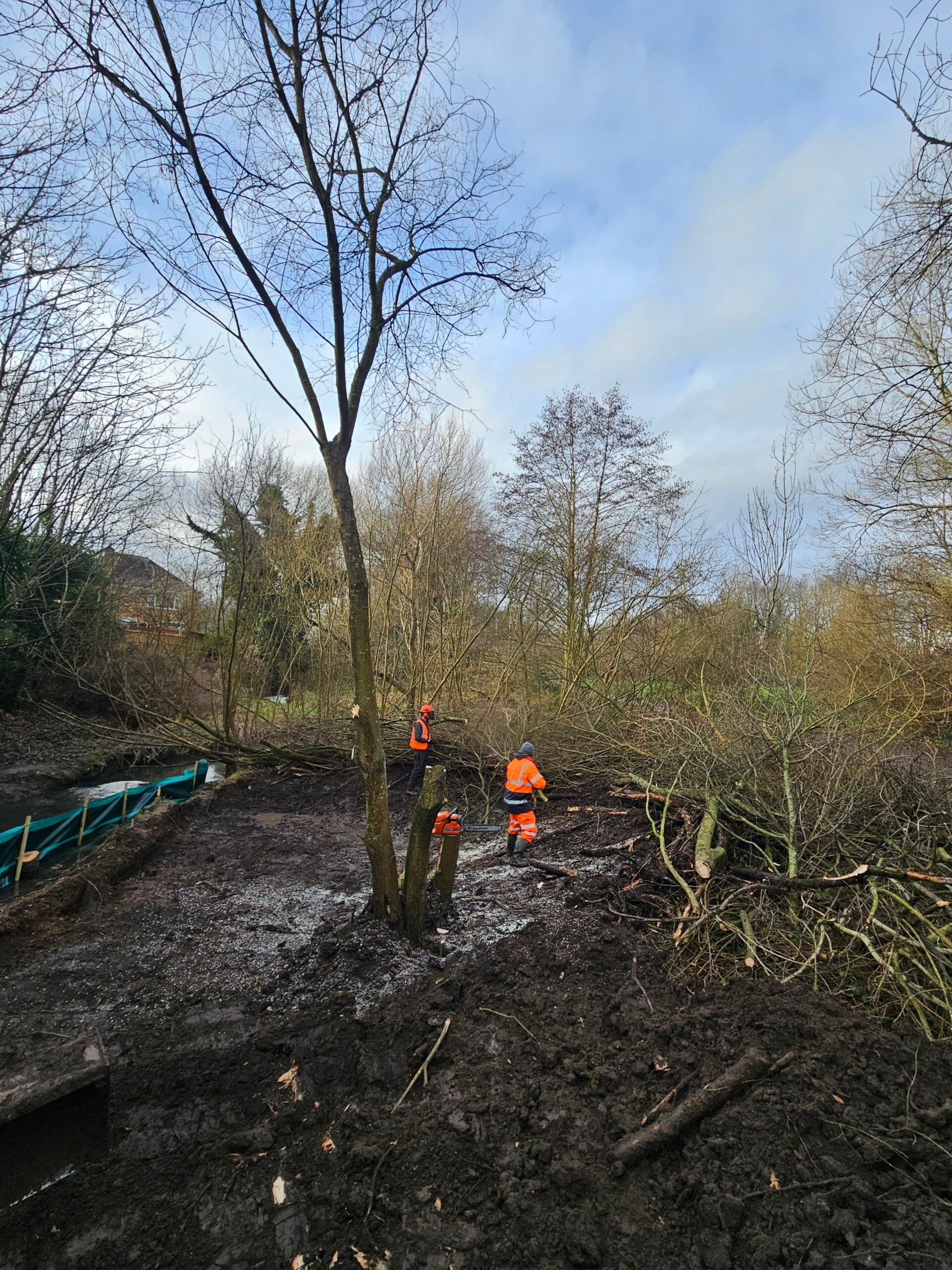
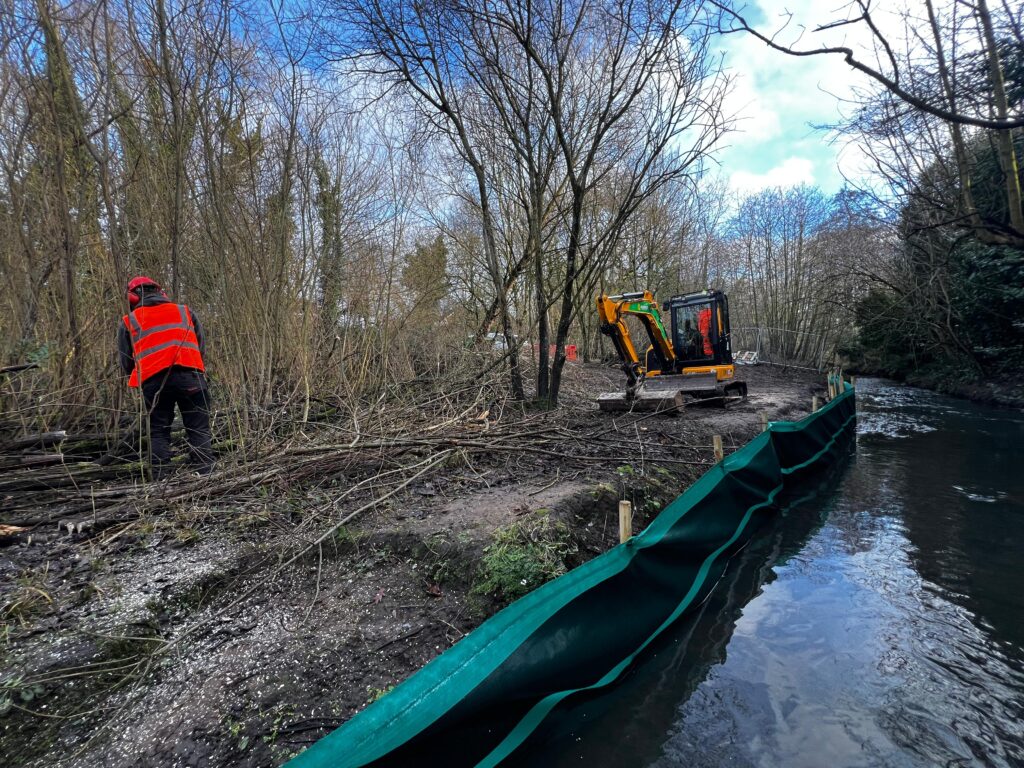
As part of the works, we created a 45m x 2m wide marginal wetland scrape on the bank of the Whittle Brook, carrying out vegetation clearance, tree felling and processing, sediment control, excavation and spoil management.
- A safe and accessible work zone was created with temporary fencing and clear public pathways. Machinery was carefully positioned and secured, and welfare facilities were provided on site.
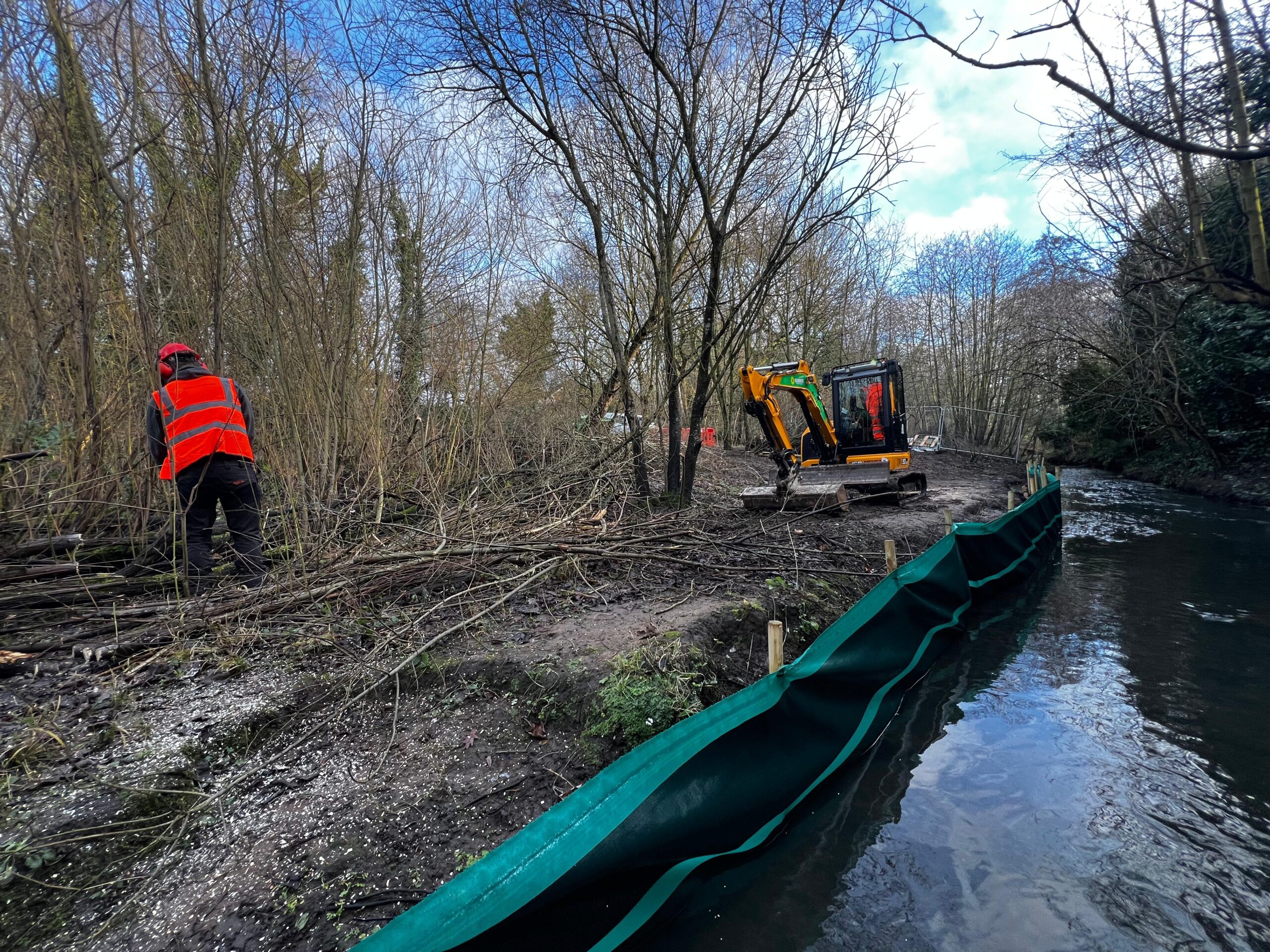
- Scrub and vegetation were manually cleared by trained operatives. Removed material was repurposed to form habitat piles along the brook, providing shelter and resources for local wildlife.
- Trees were selectively felled by certified operators, with logs cut and stacked to create hedgehog hibernation nests and invertebrate habitat. Safety and communication measures ensured smooth operations near the public.
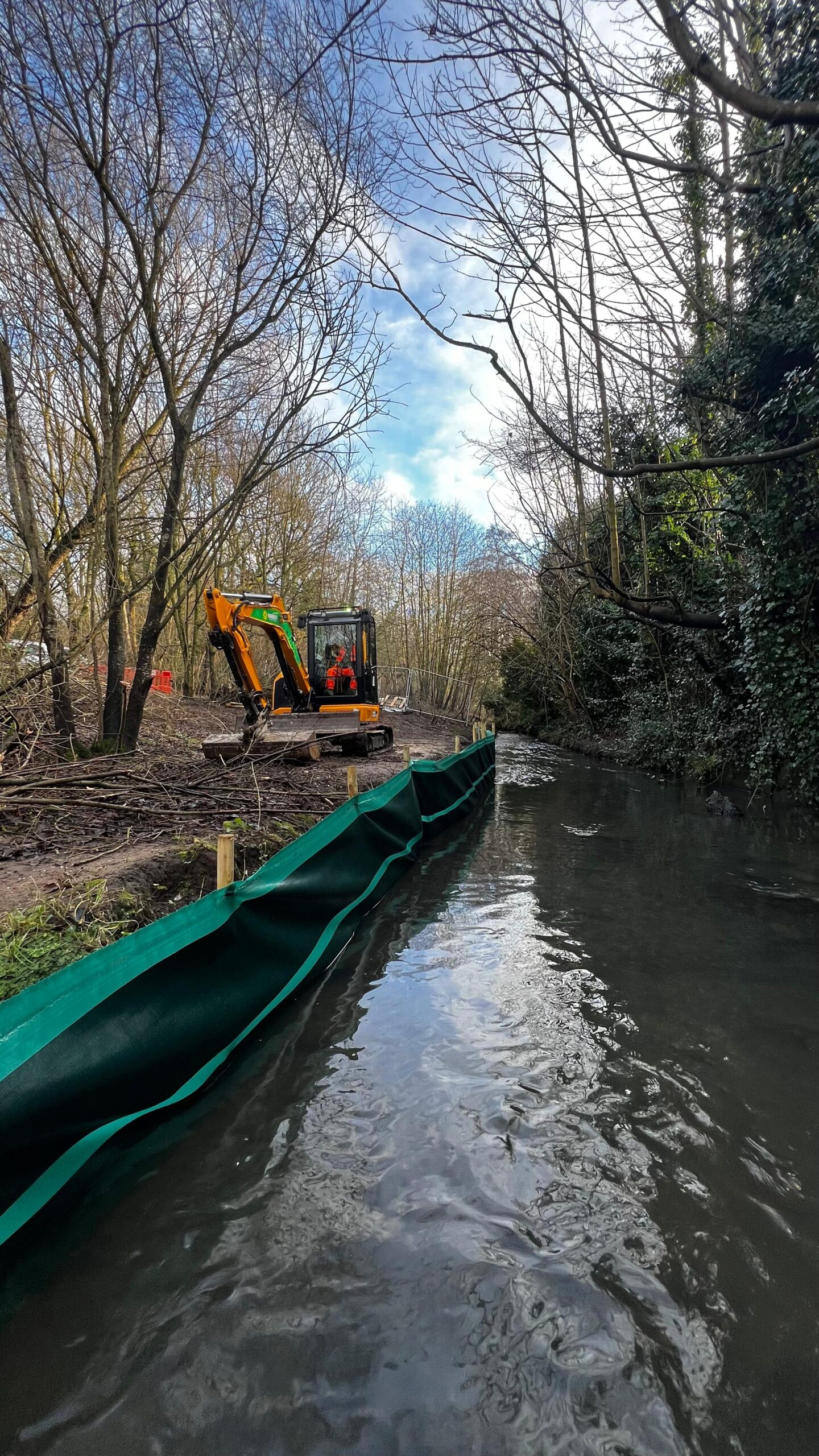
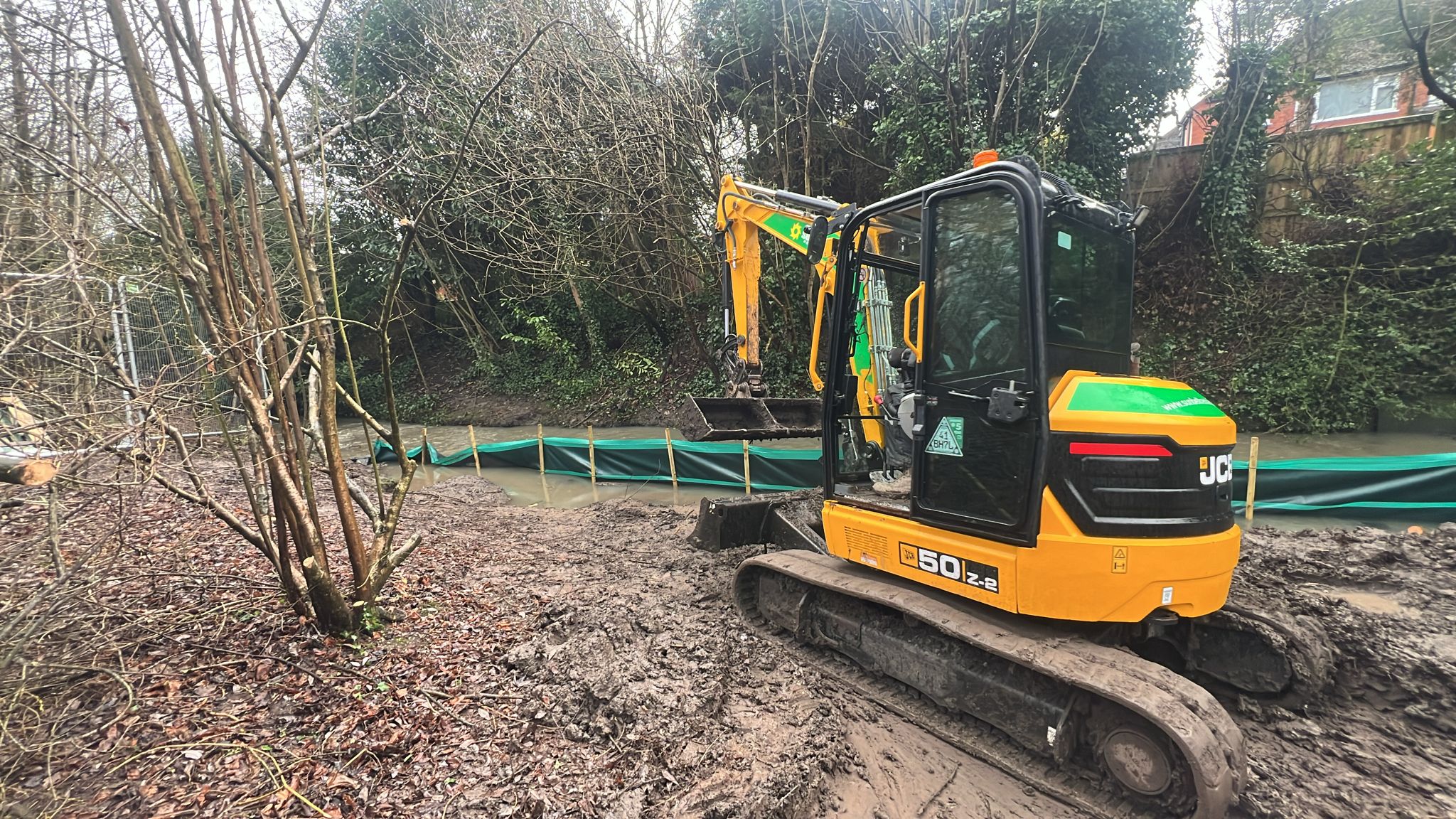
- Silt fencing was installed to prevent sediment entering the brook during works. Any displaced material was collected and reused on site, keeping the water clean and the environment safe.
- Excavation carefully reshaped the riverbed and banks, using machinery in a controlled, sensitive manner. Spoil was reused to form natural bunds and banks, supporting long-term habitat resilience.
- The site was left clean and tidy, with all temporary fencing removed. Spoil and arisings were sustainably reused, and the site was signed off with the project manager, leaving Whittle Brook ready to thrive with new wetland habitats.
Following completion of the works, the scrape was planted out by Mersey Rivers Trust volunteers, predominantly with common reeds and other wetland plant species.